
How to Stop Sugar Cravings Naturally: A Science-Backed Gut Health Guide
Dr. Chomba Chuma
MD & Founder, GutSlim
Discover how to stop sugar cravings naturally by optimizing your gut health and hormone balance. Read our science-backed guide to regain your metabolic control.
How to Stop Sugar Cravings Naturally: A Science-Backed Gut Health Guide
Sugar cravings are often misunderstood as a simple lack of willpower, but from a clinical perspective, they are complex signals from your microbiome and endocrine system. When you find yourself reaching for sweets, your body may be communicating a deeper need for metabolic balance, stable blood sugar levels, or a more diverse gut environment. As the founder of GutSlim, I observe that many individuals struggle with persistent urges for refined carbohydrates because their internal ecosystems are not functioning at their peak. By addressing the root biological triggers rather than relying on sheer effort, you can support your body in finding a more harmonious state of appetite regulation.
Understanding the Biological Roots of Your Cravings
At the center of your appetite regulation lies a delicate feedback loop involving hormones such as GLP-1. This hormone, produced in your intestines, acts as a signaling molecule to your brain to signal satiety and satisfaction after a meal. When your gut microbiome is not thriving, the production of these satiety signals can be disrupted, leading to a scenario where you feel hungry despite having consumed adequate calories. Scientific exploration into the surprising role of gut bacteria in hunger control suggests that specific microbial populations actually influence your food preferences by manipulating the vagus nerve.
The gut microbiota can influence host eating behavior via the gut-brain axis, potentially driving the selection of specific nutrients to support the survival of particular bacterial populations. — Alcock et al., 2014, BioEssays (https://pubmed.ncbi.nlm.nih.gov/25103418/)
The Microbiome’s Manipulation of Hunger
Bacteria in the gut are constantly evolving to consume the resources available in the digestive tract. Certain strains thrive on simple sugars, which are quickly broken down and absorbed. When these specific bacteria dominate your gut, they may secrete neuroactive chemicals that reach the brain via the vagus nerve. This can create a physical sense of "needing" a snack even when your caloric requirements have been met.
Aligning Your Microbiota for Success
By shifting your dietary focus toward prebiotic-rich foods, you can foster a diverse microbial community that supports stable metabolic health. These beneficial bacteria thrive on complex fibers that do not cause blood sugar spikes. Rather than fighting your body, the goal is to cultivate an environment where beneficial bacteria help manage your appetite naturally. This internal shift can make the difference between white-knuckling through an afternoon and feeling genuinely satisfied.
The Crucial Link Between Gut Health and Blood Sugar
Stabilizing your blood sugar is the most effective way to address the physiological drivers of sugar cravings. When you consume refined sugars, your blood glucose levels spike rapidly, followed by an equally sharp drop, which triggers a biological alarm in your body. This energy crash is often interpreted by your brain as an urgent need for more fuel, typically in the form of high-energy, sugary snacks. Managing this cycle requires a focus on nutrient-dense foods that provide sustained energy.
Preventing the Glucose Rollercoaster
To support your metabolism, consider how inflammation affects your ability to process glucose. Research indicates that chronic, low-grade systemic inflammation can interfere with insulin signaling, making your cells less responsive to the glucose in your bloodstream. Supporting this process involves reducing internal stressors through consistent, high-quality fiber intake and probiotic support. You can explore more about these pathways in our guide on how to increase GLP-1 naturally with food for better metabolism.
Fiber as a Metabolic Anchor
By keeping your blood sugar stable, you reduce the signal to your brain that you need a quick caloric fix, effectively smoothing out your appetite throughout the day. Fiber acts as a physical buffer in the digestive tract, slowing the rate at which glucose enters the bloodstream. When glucose enters the blood gradually, the pancreas does not overreact with excessive insulin. This stable environment is the foundation for lasting control over cravings.
How Probiotics Support Your Metabolic Resilience
Probiotics are not just for digestion, as they serve as active participants in your overall metabolic architecture. A healthy gut environment is linked to improved secretion of satiety hormones, which naturally lowers the urge for constant snacking. When you provide your gut with the right probiotic strains, you are building the foundation for better metabolic flexibility. Many of my clients find that once they begin supporting their microbiome, the intensity of their cravings begins to diminish on its own.
Probiotics may exert beneficial effects on weight management by improving gut barrier integrity and modulating the secretion of gut hormones like GLP-1, which are critical for appetite suppression. — Harvard Health Publishing (https://www.health.harvard.edu/blog/should-you-take-probiotics-2019032816300)
Enhancing Gut Barrier Integrity
A compromised gut barrier, often called "leaky gut," allows metabolic toxins to enter the bloodstream, which may trigger systemic inflammation. By utilizing specific probiotic strains, you can support the tight junctions of the intestinal lining. This physical reinforcement helps ensure that your metabolic signals—including those for hunger and fullness—are communicated clearly to the brain.
Targeted Nutritional Support
Integrating a targeted probiotic can assist your body in maintaining the delicate balance required for appetite control. If you are looking to provide your body with specific support for these goals, our https://www.velobiotics.com/products/gutslim-probiotics-glp-1-booster is designed with metabolic health in mind. By maintaining the integrity of your gut lining and encouraging the production of beneficial metabolites, you create an internal environment that supports your natural weight management efforts rather than working against them.
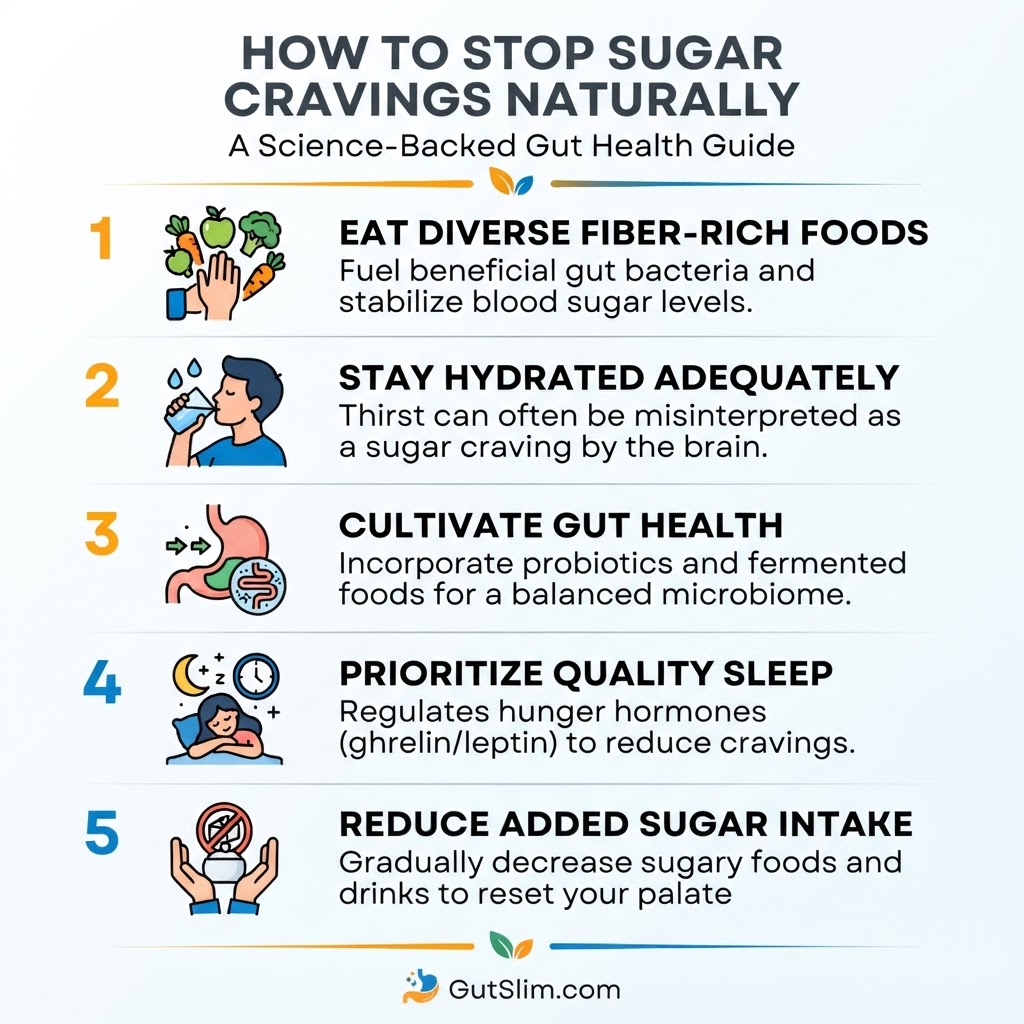
Infographic: how to stop sugar cravings naturally
Practical Strategies for Consistent Appetite Management
Consistency is the hallmark of any successful approach to health, especially when managing appetite. Start by prioritizing high-fiber vegetables in every meal, as fiber acts as a natural stabilizer for blood glucose. Fiber also serves as a prebiotic, which provides the necessary fuel for your healthy gut bacteria. When your beneficial bacteria are well-fed, they produce short-chain fatty acids that support satiety and reduce systemic inflammation.
Daily Rituals for Metabolic Balance
Consider these steps to support your journey:
- Increase your intake of cruciferous vegetables: Broccoli, kale, and Brussels sprouts provide essential fiber and phytonutrients that feed your beneficial gut flora.
- Prioritize hydration: Often, the brain misinterprets mild dehydration as hunger. Ensure you are hydrating with water instead of calorie-dense beverages throughout the day to keep your systems functioning optimally.
- Incorporate fermented foods: Adding small portions of kimchi, sauerkraut, or kefir introduces diverse microbial life to your digestive tract, strengthening your internal ecosystem.
- Practice mindful eating: Chewing your food thoroughly allows your digestive enzymes to work efficiently and gives your hormonal signals enough time to reach your brain.
- Establish meal timing: Align your meals with a consistent schedule to help your body anticipate nutrient delivery, which lowers the likelihood of reactive snacking.
Creating Lasting Habits
Each of these small shifts contributes to a larger picture of metabolic wellness. By focusing on these habits, you move away from the reactive cycle of cravings and toward a more proactive, balanced state of health. Consistency allows your microbiome to stabilize, making it easier for you to navigate daily dietary choices without feeling deprived.
The Role of Lifestyle in Controlling Cravings
Your environment and daily routines have a profound impact on your food choices. Sleep deprivation, for example, is strongly linked to increased ghrelin levels, the hunger hormone, and decreased leptin, which signals fullness. When you do not get adequate rest, your body naturally seeks out quick energy sources to compensate for the fatigue, which is almost always sugar. Focusing on sleep hygiene is a fundamental aspect of managing your cravings naturally.
Stress Management and Cortisol
Stress also plays a significant role in how your body handles hunger. High cortisol levels, often associated with chronic stress, can drive cravings for comfort foods that trigger dopamine release. Developing stress-management techniques is essential for breaking this cycle. Whether it is a brisk walk or a few minutes of focused breathing, finding ways to calm your nervous system helps reduce the physiological pressure to reach for sugar.
Leveraging Whole Foods
According to resources from the World Health Organization, focusing on whole, unprocessed foods is essential for long-term health and appetite stability. Processed foods often contain hidden sugars and chemicals that can disrupt gut health and trigger further cravings. By creating a lifestyle that supports, rather than taxes, your body, you empower yourself to make choices that serve your goals. Prioritizing rest, movement, and real food creates a solid foundation for metabolic longevity.
Taking Your First Steps Toward Metabolic Balance
Embarking on the journey to manage your cravings does not have to be an overwhelming process. It begins with one small, intentional choice each day that honors your body and supports your gut microbiome. If you want to take a meaningful step today, I encourage you to add one serving of fiber-rich, leafy greens to your lunch or dinner. This single act introduces the prebiotics your gut needs to thrive and helps moderate your blood sugar levels for the rest of the day.
Committing to Your Future Health
For those ready to provide their system with more targeted support, you can explore our complete range of metabolic health solutions at https://www.velobiotics.com/collections/gutslim. Our products are formulated to assist your gut in its vital role of hormone production and metabolic efficiency. Remember that your health is a personal journey, and it is always a good idea to speak with your healthcare professional before starting any new supplement or dietary plan.
Joining the Community
For more evidence-based insights on gut health and metabolism, join our community by subscribing to the GutSlim newsletter. Your path to a more balanced, energized self is built on the foundation of a healthy gut. By staying informed and consistent, you are setting the stage for a lifestyle where sugar cravings no longer dictate your daily choices. Your dedication to your microbiome today will pay dividends in your metabolic health for years to come.
Dr. Chomba Chuma
MD & Founder, GutSlim
Dr. Chomba Chuma is a medical doctor and gut health specialist with over a decade of clinical experience. As founder of GutSlim, she is on a mission to help people transform their health through the power of the gut microbiome.
Get gut-smart, one email at a time.
Science made simple, practical tips and member-only offers from GutSlim. No spam, unsubscribe anytime.
Related Articles

Ready to transform your gut health?
Take the free 2-minute Gut Archetype Quiz and discover your personalised protocol.
Take the Free Quiz →