
Probiotics That Support GLP-1 Production: A Guide to Metabolic Wellness
Dr. Chomba Chuma
MD & Founder, GutSlim
Discover how specific probiotics that support GLP-1 production may assist your metabolic goals. Read our expert guide to gut-based weight management strategies.
TITLE: Probiotics That Support GLP-1 Production: A Guide to Metabolic Wellness
As the founder of GutSlim, I am frequently asked about the intersection between the microscopic world in our gut and the complex hormones that govern our appetite. Many individuals are searching for evidence-based ways to influence their metabolic health without relying solely on synthetic interventions. One of the most promising areas of research involves specific strains of bacteria that may naturally enhance the body's own production of glucagon-like peptide-1, or GLP-1. By selecting the right microbial partners, you can focus on supporting your body's innate ability to manage hunger signals and improve glycemic responses over time. This article explores the science behind these gut-microbiome interactions and provides a roadmap for those looking to optimize their wellness through targeted gut support. Please note that this information is for educational purposes, and you should always discuss significant changes to your health regimen with a qualified healthcare professional.
The Biological Connection Between Your Gut and GLP-1
Scientists have long understood that the gut is far more than a simple digestive tube. It acts as an endocrine organ, communicating with the brain via a complex network of nerves, hormones, and chemical signals. At the center of this communication is GLP-1, a hormone secreted in the small intestine in response to food intake. This hormone is a key player in metabolic regulation, signaling to the brain that we are satisfied and helping the pancreas manage insulin secretion.
How L-Cells Function as Sensors
L-cells are specialized endocrine cells found primarily in the distal ileum and colon. They function as biological sensors, "tasting" the environment of your gut to determine the nutritional density of your meals. When these cells detect specific metabolites—often produced by beneficial bacteria—they trigger the release of GLP-1 into the bloodstream. This secretion acts as a natural feedback loop, helping to modulate how your body processes energy.
The Gut-Brain Axis Communication
The connection between your intestines and your brain is a two-way street known as the gut-brain axis. GLP-1 influences the vagus nerve, which carries signals directly from the gut to the brain’s satiety centers. When your microbiome is thriving, this communication is clear, helping you feel satisfied at appropriate times. An imbalanced gut may lead to "noisy" signals, making it harder for your body to recognize true fullness.
The gut microbiota can influence host metabolism through the production of bioactive metabolites that act as signaling molecules for intestinal endocrine cells, including those that produce GLP-1. — National Institutes of Health, 2022, https://pubmed.ncbi.nlm.nih.gov/35189332/
When we discuss probiotics that support GLP-1 production, we are looking at how certain beneficial bacteria facilitate this cross-talk. A healthy, diverse microbiome creates a chemical environment that encourages L-cells to perform their duties efficiently. By maintaining a balanced internal ecosystem, you provide the biological infrastructure necessary for these processes to thrive.
Why Specific Microbial Diversity Matters for Metabolic Support
Not all bacteria are equal when it comes to supporting metabolic health. The diversity of your gut flora is a primary indicator of your overall resilience. When a microbiome is depleted or dominated by non-beneficial species, the signaling pathways between the gut and the brain can become sluggish. This is why incorporating targeted microbial support is often discussed in our previous insights on understanding GLP-1: the gut hormone revolution.
The Power of Short-Chain Fatty Acids (SCFAs)
A diverse set of bacteria, particularly those belonging to the Lactobacillus and Bifidobacterium families, has been associated with more consistent hormone secretion patterns. These bacteria produce short-chain fatty acids (SCFAs), such as butyrate, propionate, and acetate, during the fermentation of dietary fibers. SCFAs serve as the fuel that keeps the intestinal lining healthy and functional. When the lining is healthy, the endocrine cells are more responsive to the presence of nutrients, which in turn encourages the natural release of GLP-1.
Avoiding "Microbial Monoculture"
Many modern diets rely on highly processed foods, which can reduce the variety of species in your gut. Think of your microbiome like a garden; if you only plant one type of flower, the ecosystem becomes fragile and susceptible to pests. By introducing a broad spectrum of probiotic species, you create a more robust environment capable of producing the full range of metabolites needed for metabolic health. To learn more about how the gut impacts your hunger levels, read our deep dive on the surprising role of gut bacteria in hunger control.
The Role of Fiber as a Probiotic Partner
Probiotics do not work in isolation. They require a substrate to ferment, which is where prebiotics come into play. A diet high in diverse plant fibers ensures that the beneficial bacteria you consume have the resources they need to create the metabolites that support GLP-1. Think of your probiotic as the seed and the fiber as the fertilizer. Without both, the ecosystem struggles to gain a foothold.
Strategic Fiber Selection
To support your microbiome effectively, prioritize fibers known as prebiotics, such as inulin, resistant starch, and fructooligosaccharides (FOS). These fibers pass through the small intestine largely undigested, reaching the colon where they act as a feast for your beneficial bacteria. Examples include chicory root, dandelion greens, garlic, onions, and under-ripe bananas. Incorporating these into your daily meals provides a consistent supply of nutrients for your microbial workforce.
The Synergy of Prebiotics and Probiotics
Many people fall into the trap of focusing only on the bacteria while neglecting the fuel source. This is a common oversight that limits the effectiveness of any gut-health strategy. By focusing on a plant-diverse diet, you create an environment where the right microbes can thrive. This synergy is essential for anyone interested in long-term metabolic health and hormonal harmony.
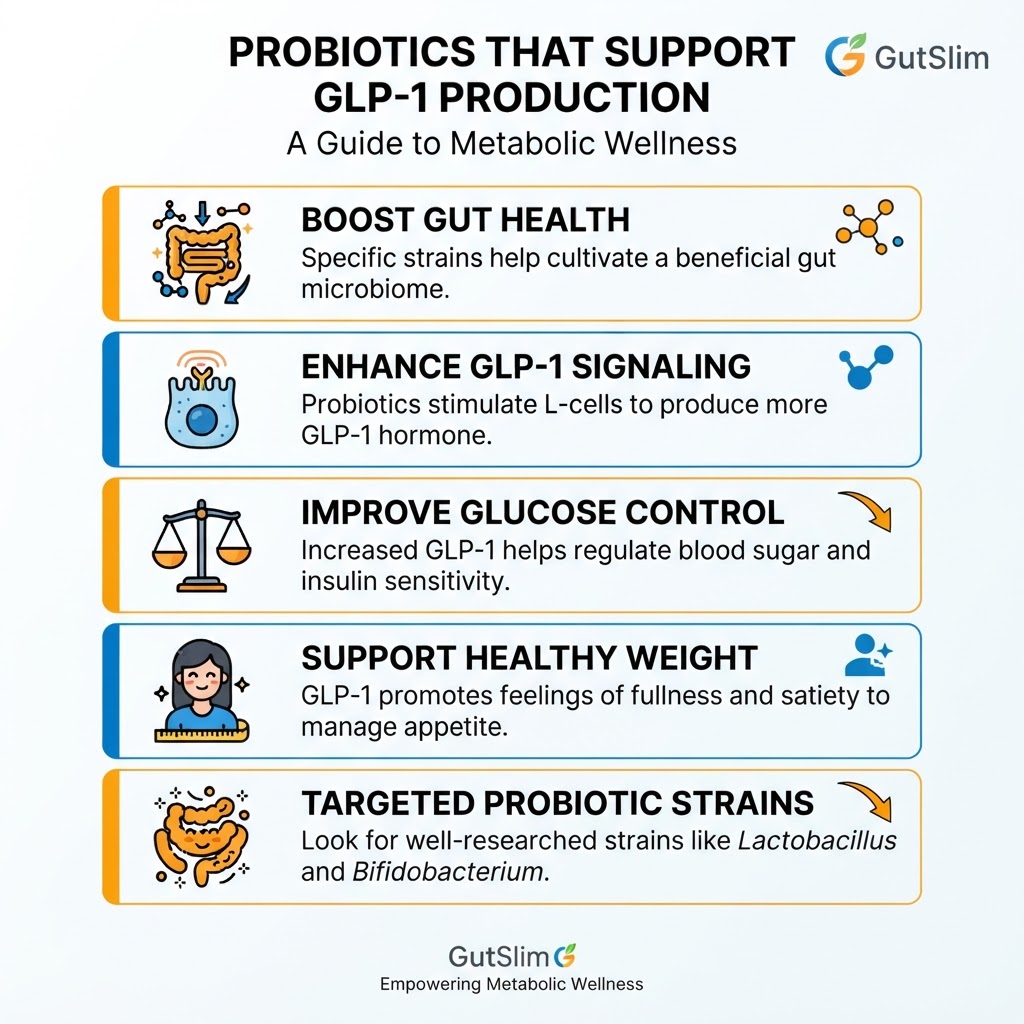
Infographic: probiotics that support glp-1 production
Identifying Beneficial Strains and Their Mechanisms
While research is ongoing, specific strains have shown promise in laboratory and clinical settings. These strains act as the engine for your metabolic gut health. For instance, some strains possess the unique ability to interact with G-protein coupled receptors on the surface of intestinal cells. This interaction is effectively a "green light" for the body to increase its natural production of metabolic hormones.
Key Bacterial Families to Consider
Research frequently highlights Akkermansia muciniphila for its role in maintaining the integrity of the gut lining and supporting metabolic function. Similarly, Lactobacillus gasseri has been studied for its potential to assist in healthy weight management. These strains are often cited for their ability to reinforce the barrier function of the intestines, which indirectly supports the efficiency of L-cells.
Biological Signaling Pathways
When you ingest these specific probiotics, they begin to influence the pH and chemical composition of the gut lumen. This shifted environment can lower systemic inflammation, which is often a barrier to efficient metabolic signaling. By modulating the gut microbiota via probiotic supplementation, you are working with your body's existing systems rather than overriding them.
Modulation of the gut microbiota via probiotic supplementation may represent a potential strategy to enhance GLP-1 secretion and improve glycemic control in individuals with metabolic challenges. — American Diabetes Association, 2021, https://diabetesjournals.org/care/article/44/1/298/138541/
The focus here is on biological support. This gentle, systemic approach is a cornerstone of the GutSlim philosophy. It is not about forcing a change, but rather about creating the conditions where the body can function optimally on its own.
Practical Steps for Integrating Gut Health into Your Routine
Creating a sustainable gut-health strategy requires consistency. It is not a quick fix, but a series of small, daily decisions that accumulate over time. Start by evaluating your current nutritional intake and look for ways to increase your fiber variety. Diversity in your plants leads to diversity in your gut, which is the most reliable way to maintain a robust population of beneficial microbes.
Building a "Probiotic-Friendly" Lifestyle
Consistency with your probiotic is key, but it must be paired with other health-promoting behaviors. Manage your stress levels, as chronic stress can actively degrade the quality of your microbiome and reduce the efficacy of your probiotic routine. When you are stressed, your body diverts energy away from digestion, which can negatively impact the environment needed for beneficial bacteria to bloom.
The Impact of Lifestyle on Microbial Health
Getting adequate sleep is another vital pillar, as documented in our work on unlocking the secret to better sleep and gut health. Furthermore, regular, moderate exercise encourages gut motility, ensuring that food moves through the digestive tract at a healthy pace. This movement helps prevent the overgrowth of less desirable bacteria and maintains an optimal habitat for the strains that support GLP-1 production.
How to Select the Right Support for Your Goals
Choosing a probiotic can be overwhelming due to the sheer number of options available on the market. When looking for products that support metabolic health, prioritize shelf-stable, multi-strain formulas that are designed to survive the harsh environment of the stomach. The delivery system matters just as much as the bacterial strains inside the capsule.
The Importance of Delivery Systems
You want to ensure that the bacteria reach their destination in the small intestine where they can interact with the L-cells. Look for enteric-coated capsules or time-release formulations that protect the beneficial bacteria from stomach acid. We have summarized the differences between various formats in our guide on spore-based vs live-culture probiotics: which reigns supreme.
Transparency and Quality Control
Always look for transparency in testing and clear labeling of the colony-forming units (CFUs). A reputable brand should provide documentation on the viability of their strains throughout the product's shelf life. A high-quality product is an investment in your long-term metabolic infrastructure, so avoid products that do not disclose their strain-specific ingredients or manufacturing standards.
Your First Step Toward Metabolic Empowerment
Supporting your gut health does not need to be a complicated, year-long project. You can start making positive changes today with simple, manageable actions. The simplest first step you can take today is to commit to one 15-minute brisk walk after your evening meal and add a serving of fermented vegetables, like sauerkraut or kimchi, to your dinner plate.
Daily Habits for Long-Term Success
These habits provide immediate feedback to your digestive system and support the daily rhythm of your metabolic hormones. Think of your after-dinner walk as a way to assist your body in managing blood sugar, and your fermented foods as a "delivery service" for the beneficial bacteria your gut craves. By layering these small changes, you build a foundation that supports your metabolism over the long haul.
Resources for Your Journey
For a more structured approach, you can explore our GutSlim GLP-1 Booster Probiotics, which are specifically formulated to provide the microbial support your body needs to maintain a healthy balance. These capsules are designed to complement your lifestyle, not dictate it. Remember that we are here to support your journey every step of the way. If you found this information helpful, please sign up for the GutSlim newsletter for weekly tips, evidence-based research, and meal planning inspiration delivered directly to your inbox. Let us help you cultivate a healthier, more vibrant version of yourself through the science of your own internal ecosystem.
Dr. Chomba Chuma
MD & Founder, GutSlim
Dr. Chomba Chuma is a medical doctor and gut health specialist with over a decade of clinical experience. As founder of GutSlim, she is on a mission to help people transform their health through the power of the gut microbiome.
Get gut-smart, one email at a time.
Science made simple, practical tips and member-only offers from GutSlim. No spam, unsubscribe anytime.
Related Articles



Ready to transform your gut health?
Take the free 2-minute Gut Archetype Quiz and discover your personalised protocol.
Take the Free Quiz →